Climbing the Grand Teton has been a dream of mine ever since I set foot in the Grand Teton National Park 2 years ago. I have always wanted to summit such a beautiful mountain, but I have never had the friends to do it with, the experience, or the weather. I take you through the journey of how I prepared to climb this mountain solo, with no training and no ropes.
Stage 1: Preparation and Anticipation
Before setting foot on the trail, I spent a few days mentally and physically preparing. With no formal training, all other aspects of my preparation had to be on point. I had been kayaking and roadtrippin the past couple of days, the thought of climbing the Grand was always in the back of my mind. I spent a wonderful Sunday gathering my thoughts and gear and absorbing some beta from my friend Bryce, with whom I had camped the night before in Teton National Park. I also borrowed some gear from Bryce that made this hike possible. I made sure I had enough food, water, and warm layers to keep me going, but not so much as to weigh me down. My gear included:
- Trail Runners
- A 12L Trail Running Backpack
- A Lot of Water
- A first-aid kit
- Liquid IVs and Gels
- Gloves
- Down Pants and Down Jacket
- 50cm Ice Axe (Small)
- Crampons
- Beanie
- Rain Jacket
- Insane amount of food (over 4.5k Calories)
As I camped at the base of the Teton, it started raining heavily. This wasn’t ideal. I kept this in the back of my mind that the rocks might be slippery, and if it got too dangerous, then I would have to turn around.
Stage 2: The Ascent Begins
At 3:30 am, I woke up and drove to the trailhead, arriving at the trailhead at 4:00 am. There were other climbers in the parking lot, but they brought ropes and trad climbing gear, so I assumed that they were doing a different route. The first few hours of this climb were honestly pretty laid back. I made my way up the incredibly long approach in the dark, seeing lots of random animals (deer, elk, moose, bear) that scared the living crap out of me but didn’t seem to be bothered by my presence. I made it to Lupine Meadows while it was still dark. This is where it started to get exciting.
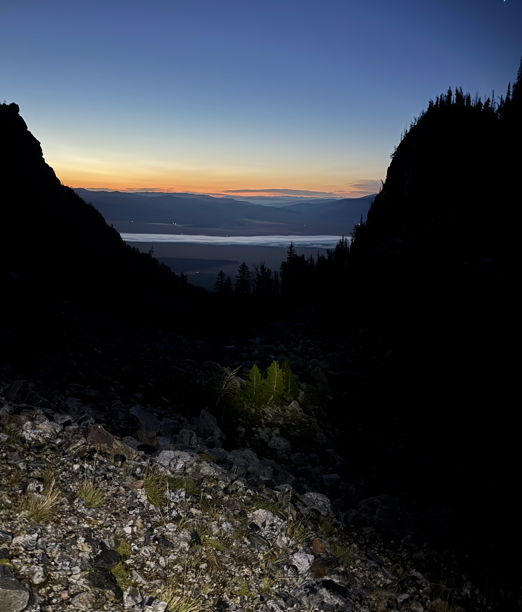
While still dark, I scrambled through around 3 boulder fields. After I completed these boulderfields with lots of parkour and careful footwork. I got to watch the sun rise in the middle of the climb from Lupine Meadows to the Lower Saddle. A very surreal experience.
I absolutely sped past all the other climbers with my very lightweight gear and trail-running shoes. I was staying hydrated and feeling good.
After making it to the lower saddle, I put on some of my warmer clothes and annihilated about 2000 calories worth of PB and J, as well as ham sandwiches. I was feeling good. I refilled my water and got ready for the final push.
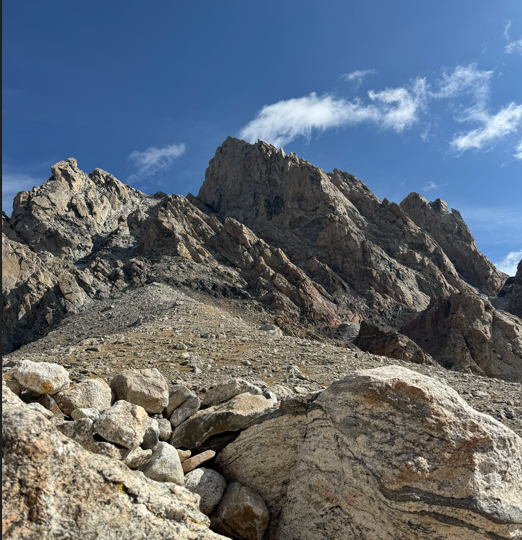
Note: The weather at the saddle was PERFECT, a beautiful, clear day with not a cloud in the sky. Which prompted my summit push.
Stage 3: Facing Challenges and Summiting
I continued up the lower saddle towards the enclosure. I started to notice the ground becoming increasingly coated with ice and water. I quickly put on my crampons and kept climbing. This ice quickly turned into a soft layer of snow, which I was more comfortable with overall. I don’t really like the feeling or sound of crampons on solid rock and ice.
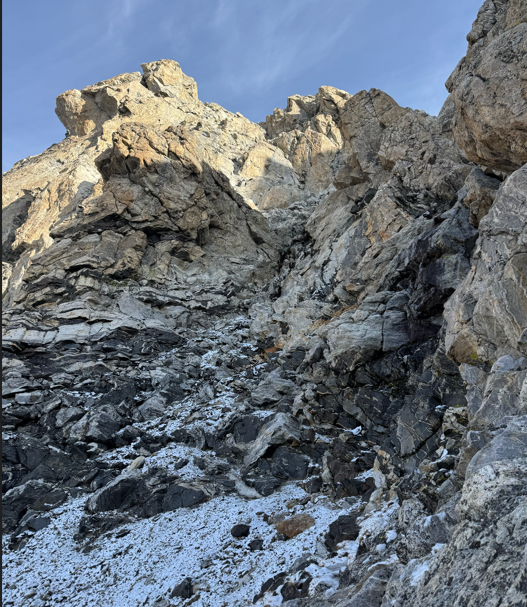
I eventually reached the most technical part of the climb (see picture below). The picture below is the beta that I was given by my good friend Bryce Johnston, and it was an absolute lifesaver. This was where I really locked in. I don’t know the official names of any of the moves I used to get to the top, but I will do my best. I just did what made sense based on the conditions.
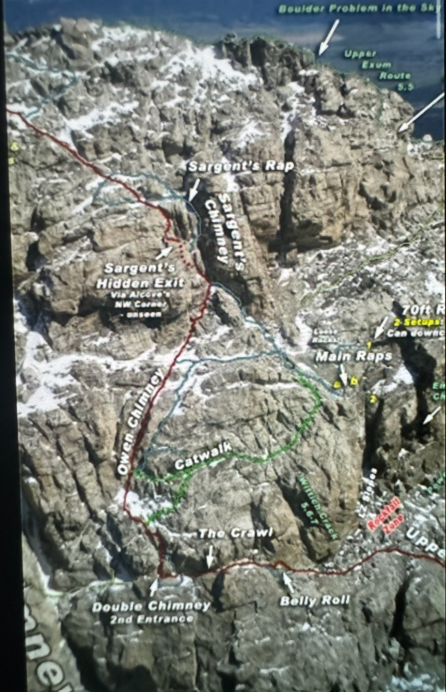
I got to the rockfall zone, and I saw the infamous “Belly Roll” section of the climb. I took my time scooting across this slightly exposed feature covered in snow; it wasn’t that bad. Then I got to the crawl, so I crawled, also wasn’t as bad as I thought. After this, I shimmied up the double chimney, which was actually kind of fun. It was getting windy and snowy, so I knew my weather window was closing.
Bryce recommended that I took the “cat walk” after this, which I felt like was the right call. This was probably the most exposed part. Some call it a “no fall zone,” but honestly, you could fall and be okay in this section (in my opinion). I took my time and made it through the catwalk with careful crampon placements and smooth movements.
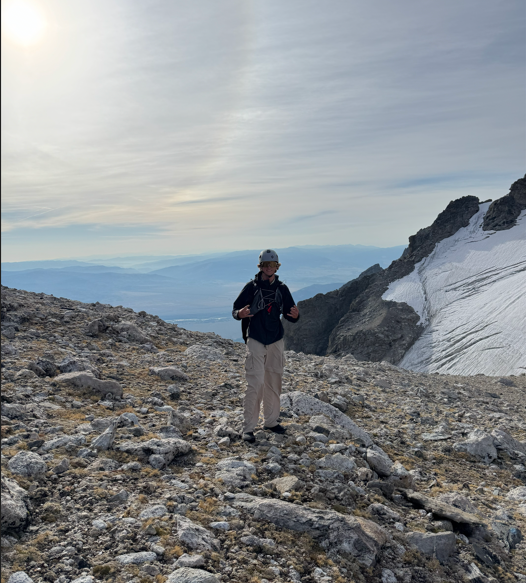
Once I got past the catwalk, it was a breeze. I started hauling up this boulder field with the summit in sight. Once I got to the summit, it was pure bliss for about five seconds until a wind gust almost knocked me over. I thought I lost my phone at this point (it was in the very bottom of my bag), so sadly no summit pic, only one very chaotic video on my 90’s camcorder.
Stage 4: The Decent
After summiting, I made a quick descent. The descent was honestly more challenging than the climb in so many ways. No one really wants to hear about the descent, though. The catwalk was slightly easier because I was following my foot steps on the way up. I submitted before 10:00 am, so I was making really good time. After reaching the lower saddle, I set out to get down to the parking lot in 1.5 hours, which was a hefty goal.
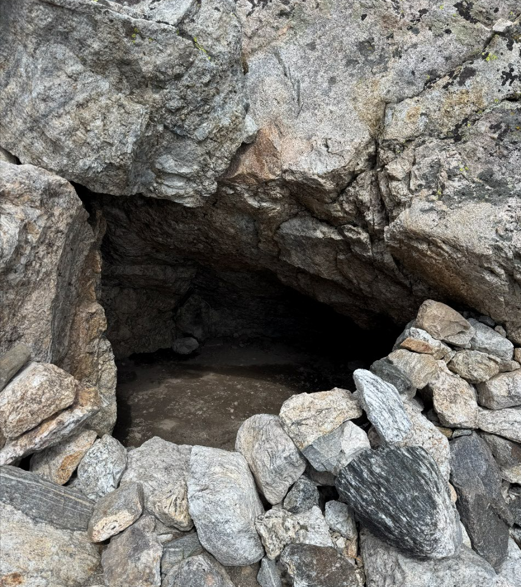
At the saddle, I took off a lot of my layers from the winter wonderland at the top to prepare for a steep trail run. I ran all the way down to the Lupine Trail Head, where my car was parked. My pace was a 10-minute mile. I was hopping over all kinds of stuff. Shout-out to all the mountain guides who let me run past their entire group while they were trying to repel. I kept eating snacks on the way down to avoid bonking.
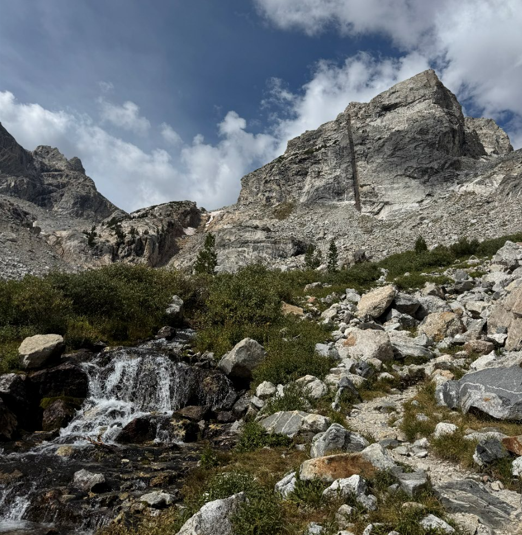
I arrived at the trailhead, feeling relieved and happy that the ascent and descent of the Grand Teton went smoothly. I downed four body armor drinks and stopped by Bryce’s work to drop off his vest. I checked my watch, and I had completed the climb in 8 hours. This wasn’t a goal that I had in mind, but I am super happy with that time and how I performed overall. There was a total of 8,500 feet of elevation gain, which was absolutely ridiculous.
Conclusion
My ascent of the Grand was a testament to my previous mountaineering experience and knowledge, as well as my ability to send it. A huge thank you to all of my friends who believed in me and encouraged me to do this. If you can do it safely alone, it is better to do it alone than not do it and miss the experience.
A message to my friends: maybe do it with me next time, so I don’t have to do it alone again lol.
FAQs
Q: Do I need training to climb the Grand Teton?
A: Training can make the grand a lot more enjoyable, but experience, willpower, and lots of food are what get you to the top.
Q: What gear is essential for climbing the Grand Teton?
A: Essential gear includes sturdy shoes or boots, a backpack, water, snacks, and lots of layers.
Q: How long does it take to climb the Grand Teton?
A: Most climbers take a full day, but it varies based on experience and pace. A 4:00 am start is recommended, and it is recommended to be off the summit by noon.
Things I wish I had done differently:
I wish I had gone with other people, I wish I had done it earlier in the season (mid-summer), I wish I had brought warmer socks, and I wish I had looked at the map more in the boulder fields that you have to navigate in the meadows.
Overall, an extraordinary adventure that I would recommend to anyone who does their research. This is not for people without mountaineering experience.