So, you’re thinking about running a trail marathon in the stunning landscapes of Utah, but life got in the way, and training… well, it just didn’t happen. Sound familiar? Buckle up, because I recently found myself in this exact situation. Against my better judgment, I laced up my shoes and took on the challenge. Here’s the (slightly terrifying) tale of how it went down, along with some hard-earned wisdom for anyone else contemplating a similar feat (or folly).
The Backstory: A Marathon on a Whim
Let’s be clear: I am not a seasoned marathon runner. I started running to pace my homeless friend Jack in a 100-mile trail race (I only ran 12 miles). My friend Lizzie told me that she was doing a half-marathon in Moab, so I decided to look into it. Turns out that there was also an option for a full marathon. I had never run more than 12 miles, so I decided to sign up for a trail marathon.
The Race: New Friends and New Problems
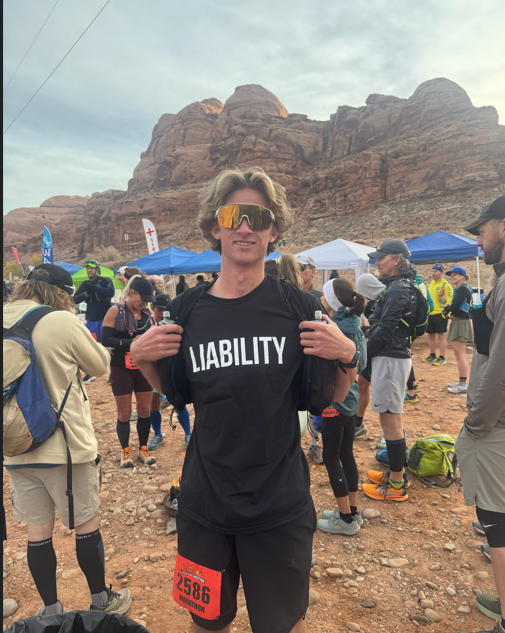
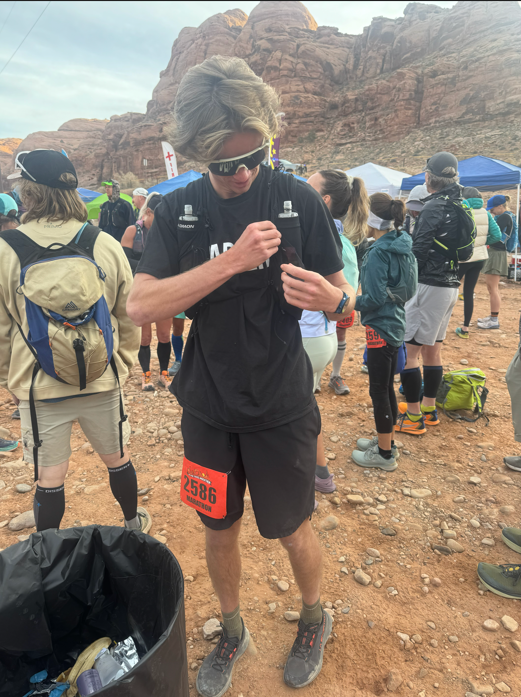
The start of the race looked like a military boot camp. Everyone was huddled around fires, wearing emergency blankets. They had free food, and I was destroying the buffet. I have never seen so many people in such vibrant clothing. I sat by the fire to warm up by myself when I found someone who looked as lost as I was. I started talking to this runner and quickly learned a lot about him. His name was Hawk (sick name), and it was also his first marathon. He didn’t have a device to pace himself, so I told him that he could follow me and I would pace him. His friends all bet that he would finish in over 8 hours, but I knew that this kid was an athletic weapon. He was also a local legend because the announcer at the race gave him a shout-out.
Miles 1-5: Denial
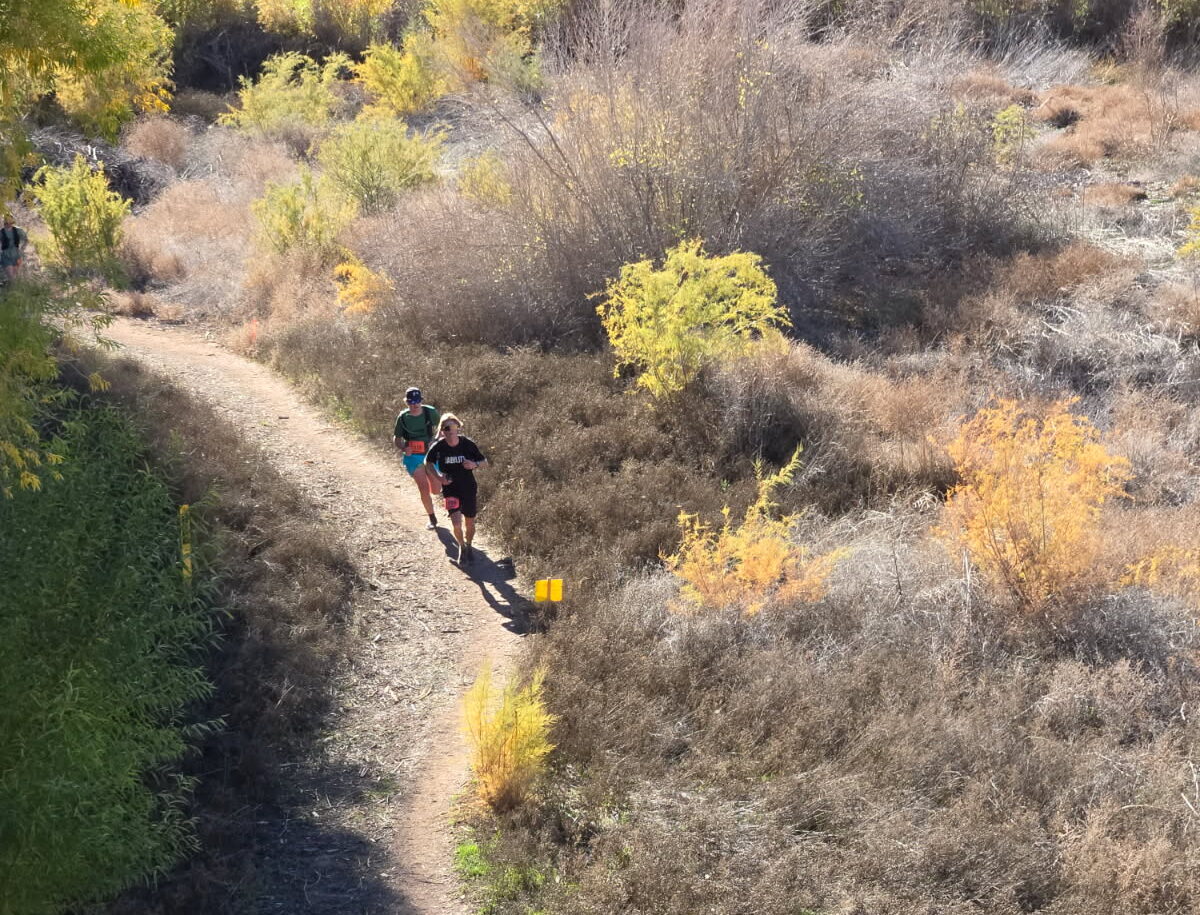
The first few miles were surprisingly manageable. The adrenaline was pumping, the scenery was breathtaking. Hawk and I were cruising, maybe a little too fast. I started to think I might actually pull this off. Energy was high, and I demolished all of the food at the first aid station.
Miles 5-13: More friends!
Around mile 5, I met a couple from Utah named Anna and Kicker (another sick name). Both of them had super interesting careers. Kicker made video game tournaments, and Anna was an engineer. Hawk and I had a blast talking to them. I started seeing runners drop left and right. This was mainly due to malnutrition or injury. Hawk and I were dialed.
Miles 14-20: The Death March
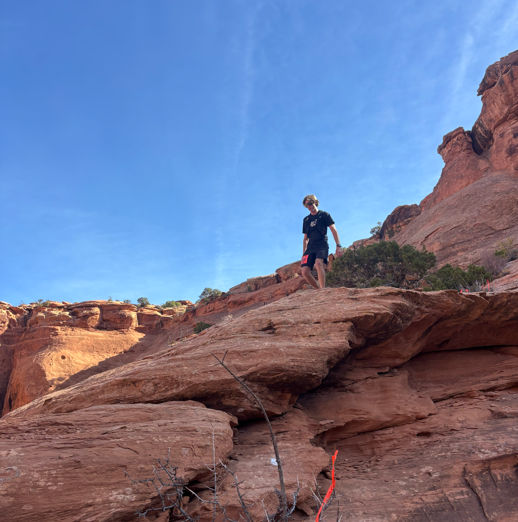
This is where things got real. Hawk and I cruised to about mile 15, then encountered 1,500 feet of elevation gain over 1.6 miles. During this hike, we did figure out Hawk’s girl situation, so that was a plus. We marched up this hill and finally reached the top. At mile 17, I put in AirPods for the first time and got my first runner’s high listening to Alice in Chains. Every step was beautiful, pure bliss.
Miles 21-26.2: Finishing Strong
At this point, the “pure bliss miles” had ended. Hawk and I keep each other accountable for walking instead of running. Miles 21-25 went by incredibly slowly. I tried my best to keep my pace up, but running downhill was getting harder. Hawk was also struggling. On top of that, it was getting hot, so we were losing a lot of water while sweating. Then, at mile 25.5, we saw it, the finish line. We made a brief stop at the last aid station and then made our final push. I got a small runner’s high and started listening to basic white-girl music, which fired me up. We finished the race with our last mile, only taking 8 minutes, a true miracle. We did the marathon in 5 hours and 30 minutes, just under our goal. I haven’t run since.
My Strategy: The Three Aspects of Running Far
When I was getting ready for this marathon, instead of training, I made up this belief about running far. Running far is a triangle. The triangle’s sides are Mental Toughness, Training, and Nutrition. As long as you have two sides of the triangle, you can run far. If you have all sides of the traingle you will enjoy it a lot more.
- Mental Toughness: Break the race into small segments in your mind so you feel a sense of accomplishment along the way. Take the thought of quitting out of your head. Talk to people around you. Remain optimistic and positive.
- Nutrition: I used Expedition Genie, an AI agent designed for the outdoors. Expedition Genie created a plan, and I could adjust it on the trail with no cell service. Eat as much as you can before the race, even if it sucks. I also ate as much as possible at the aid stations. Eating the right amount of salt and carbs is essential to preventing your body from shutting down.
- Training: Not sure how to do this one.
Gear Up
You don’t need much gear to run a marathon, but the gear that you do have really matters.
- Trail Running Shoes: shoes that are comfortable and sturdy.
- Comfortable Socks: Blisters are the enemy. I try to use Smartwool or Darntough socks.
- Hydration Pack: I got this one on Amazon and used it. I mainly carried two flasks of straight liquid iv and drank as much water at the aid stations as I could. I’m not sure that I would recommend that.
- Energy Gels/Chews: Easy-to-digest fuel for a quick energy boost. I like the brand SIG and GU, personally the more liquid the better. When it’s cold, I lean toward savory flavors; when it’s hot, I lean toward sweet, fruity ones.
- Sun Glasses: Protect your eyes from the sun, mine were definitely overkill, but these are the best sunglasses money can buy (they are 40% off on Amazon right now),
The Aftermath: Recovery and Reflection
Unsurprisingly, the days after my marathon were pretty rough, but I didn’t throw up once. The feeling of accomplishment overwhelmed the feeling of walking like a zombie to class. I had done something incredibly challenging, something that I wasn’t sure I could do.
Would I recommend running a marathon with no training? Yeah probably. With the right mindset and a good buddy, you can do pretty much anything. This race taught me more about pacing and nutrition then actually running. It was a good way to make sure that I’m still in shape. It also gave me a funny story to tell my friends.
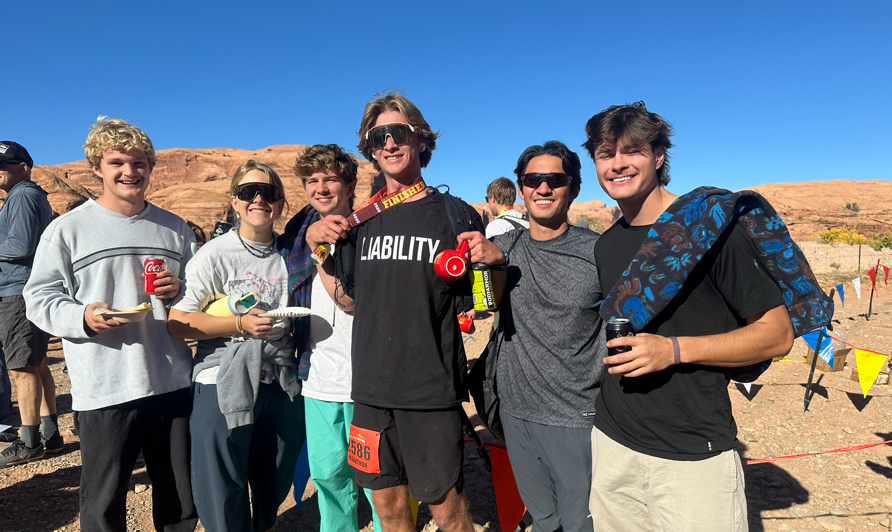
With the power of friendship, you can do anything.
FAQs
Q: Is it safe to run a marathon with no training?
A: No, it is not recommended. Running a marathon without proper training can increase your risk of injury and health complications.
Q: What should I eat during a marathon if I haven’t trained?
A: Carb loading hard before the race is the most important part. Focus on easy-to-digest carbohydrates like energy gels, chews, or bananas. Also, make sure to replenish electrolytes.
Q: How long does it take to recover from a marathon with no training?
A: Recovery time can vary, but it will likely take longer than if you had trained properly. Expect to feel sore for at least a week, and avoid strenuous activity until your body has fully recovered.
Q: What are the risks of running a marathon without training?
A: Risks include muscle strains, joint pain, dehydration, electrolyte imbalance, and potentially more serious health issues like heatstroke or heart problems.
Q: What should I do if I start feeling pain during the marathon?
A: Listen to your body and stop if you experience any sharp or severe pain. It’s better to drop out of the race than to risk a serious injury.